Guide · 4 min read
Cat zoomies at night: why your cat goes wild at 3 AM, and how to sleep again
Cats are most active around dawn and dusk, and an indoor cat who has slept all day has a full tank at bedtime. The fix is a routine: a proper play session in the evening, the last meal of the day straight after it, and no food or attention for nighttime wake-up calls, ever. Stick with it for about two weeks. If the night activity is new, or your cat is older, yowling or losing weight, see your vet before you change anything.
Why cats get the zoomies at night
Zoomies are short, sudden bursts of running that look faintly unhinged and are entirely normal. Cats are crepuscular, which means their body clock peaks at dusk and dawn, when their prey would be out. Add a day spent asleep in an empty apartment, and the hallway becomes a racetrack at 11 PM.
Kittens and young cats do it most. Some cats also sprint after using the litter box. None of it is misbehavior. It is unused energy finding the exit.
When nighttime activity needs a vet
Rule this out first. A cat whose nighttime behavior changes suddenly, especially a middle-aged or senior cat, should have a checkup. Restlessness and loud calling at night can go with pain, an overactive thyroid, failing senses or age-related confusion, and no play routine will fix those. The same goes for zoomies that look frightened or painful rather than playful, or that come with straining in the litter box.
The evening routine: hunt, eat, sleep
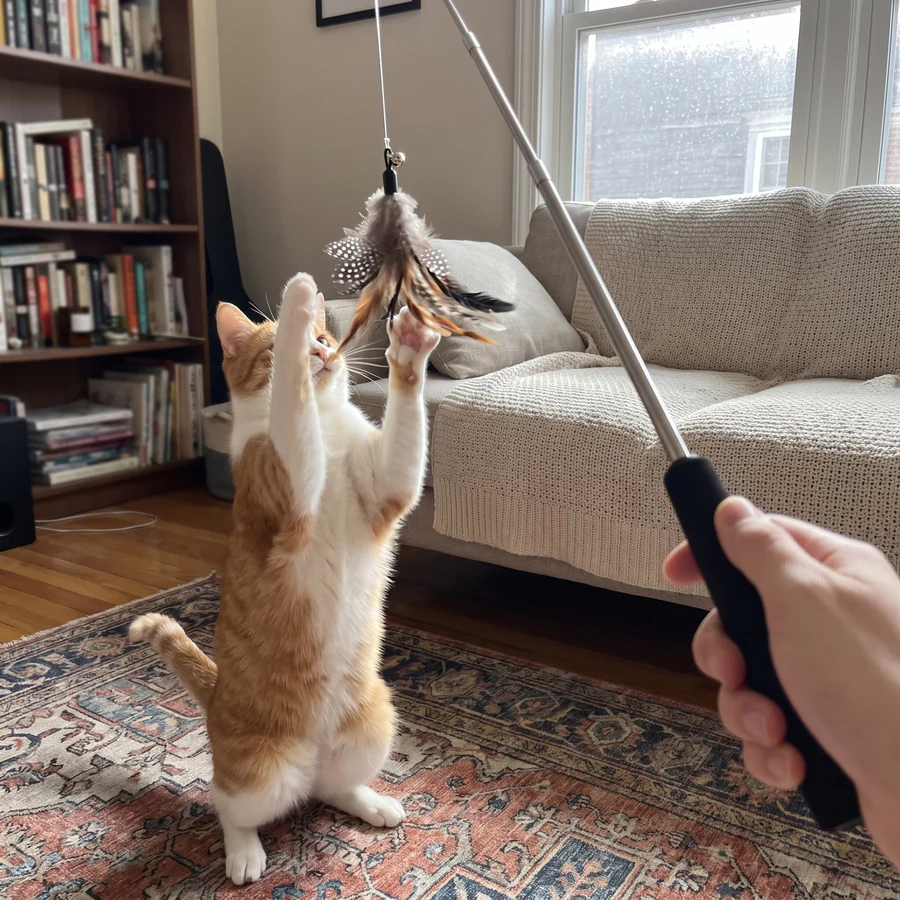
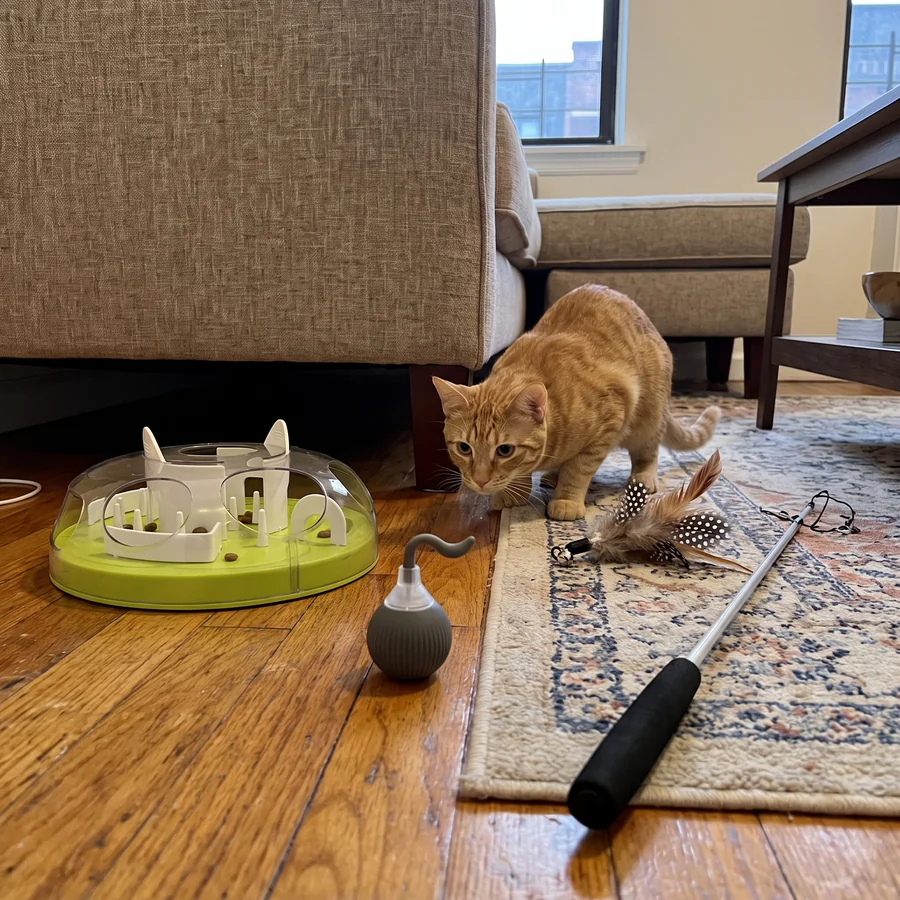
Cat behaviorist Jackson Galaxy describes a cat’s natural rhythm as hunt, catch, kill, eat, groom, sleep. Your evening should follow it. An hour or two before your own bedtime, run a real play session. Make a feather wand toy behave like prey: skim it along the floor, hide it behind furniture, let it freeze, let it flee. Let them catch it several times.
Wind the game down gradually rather than stopping dead, then serve the last meal of the day right away. The San Francisco SPCA recommends making this the largest meal. A cat who has hunted and eaten will usually wash and then sleep. Put the wand away afterward, since string toys are for supervised play only.
How long should you play with your cat?
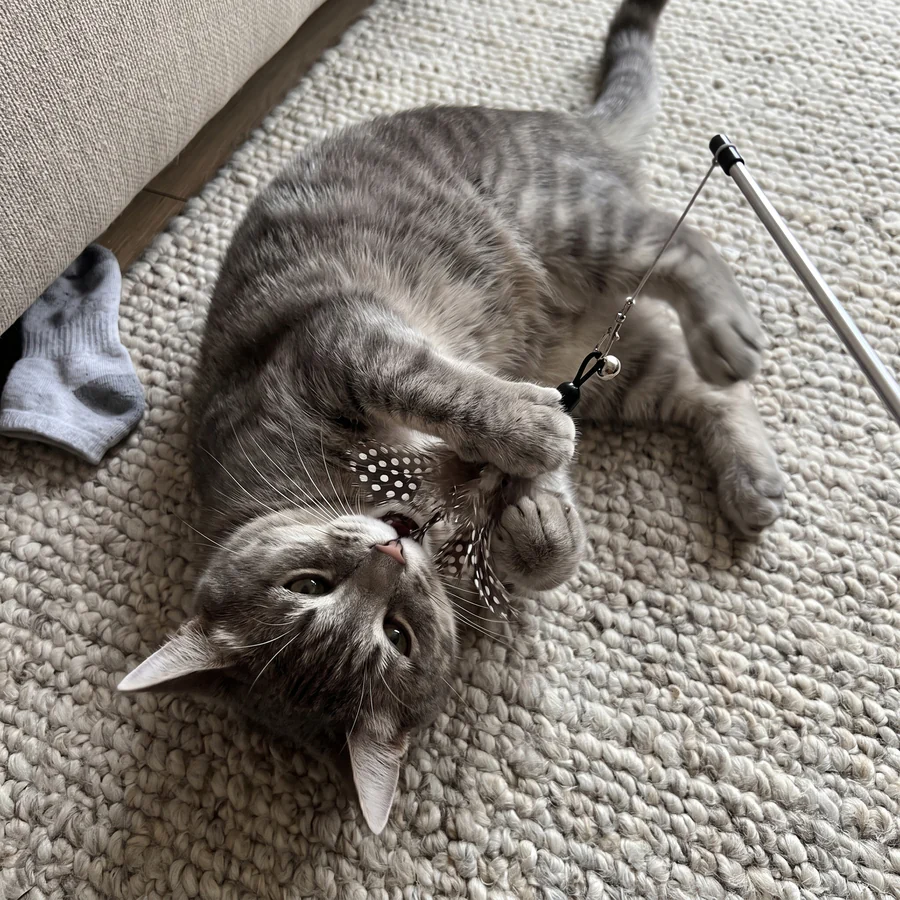
Less than you fear. PetMD suggests two or three sessions of 10 to 15 minutes a day, and International Cat Care points out that cats are sprinters, so short and intense beats long and halfhearted. One session before work and one before bed suits most adult cats. Kittens need more, in smaller pieces. You will know it worked when your cat flops on their side and watches the feather go by without getting up.
Do not answer the 3 AM wake-up call
If meowing at 3 AM has ever produced breakfast, your cat has learned that meowing at 3 AM produces breakfast. VCA Animal Hospitals’ behavior advice is that any response at all, including telling them off, rewards the habit. So do nothing. No food, no play, no conversation. Earplugs help.
Expect a rough stretch before it improves. Galaxy’s estimate is ten days to two weeks of consistency. Two details make it easier. Do not serve breakfast the moment you get up, or the alarm call will creep earlier. And if your cat is a dawn riser, a timed feeder can deliver an early snack, so that food stops being connected to waking you.
Use up energy during the day
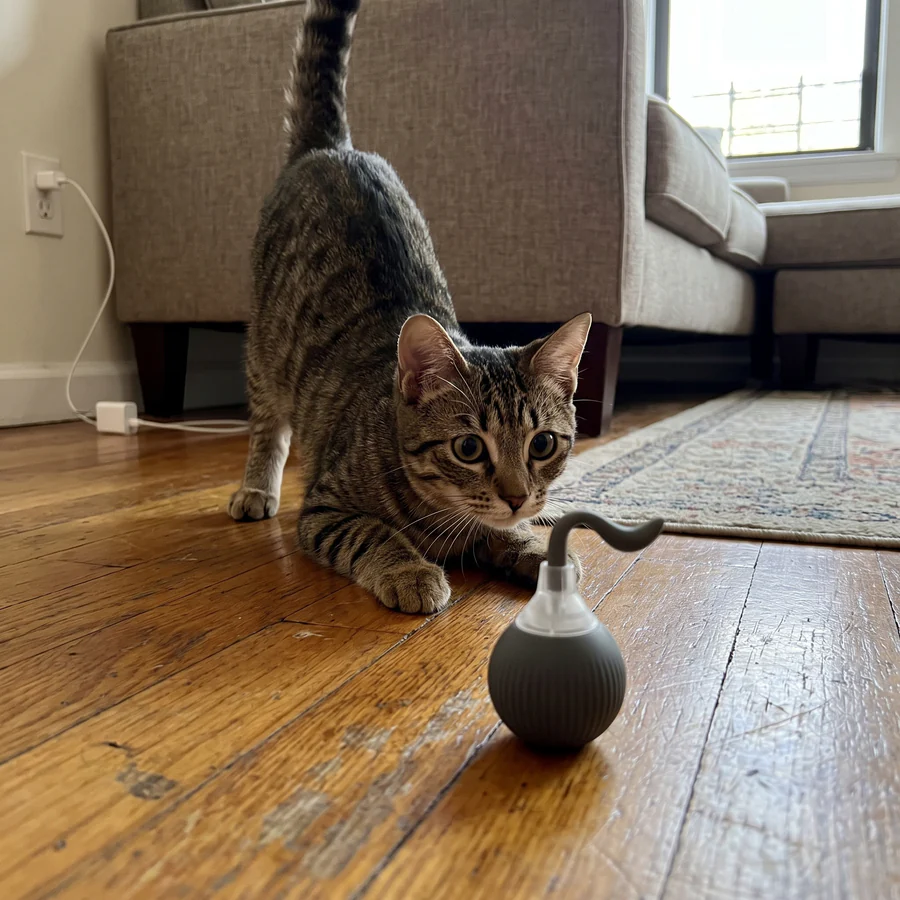
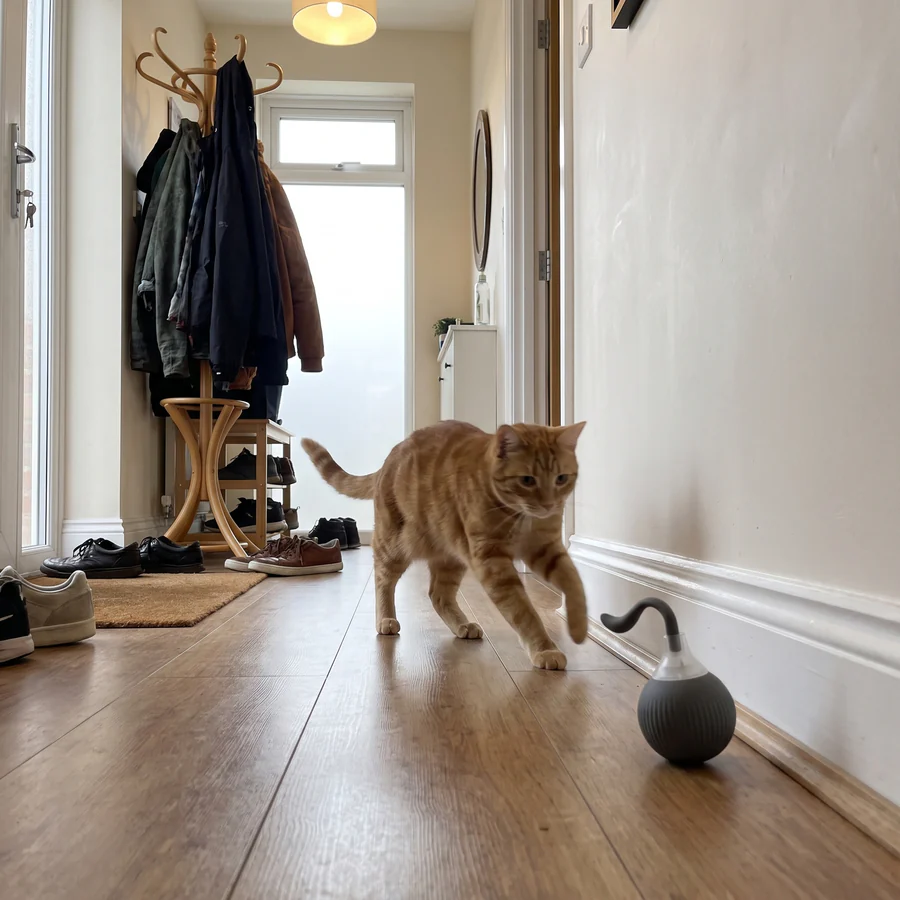
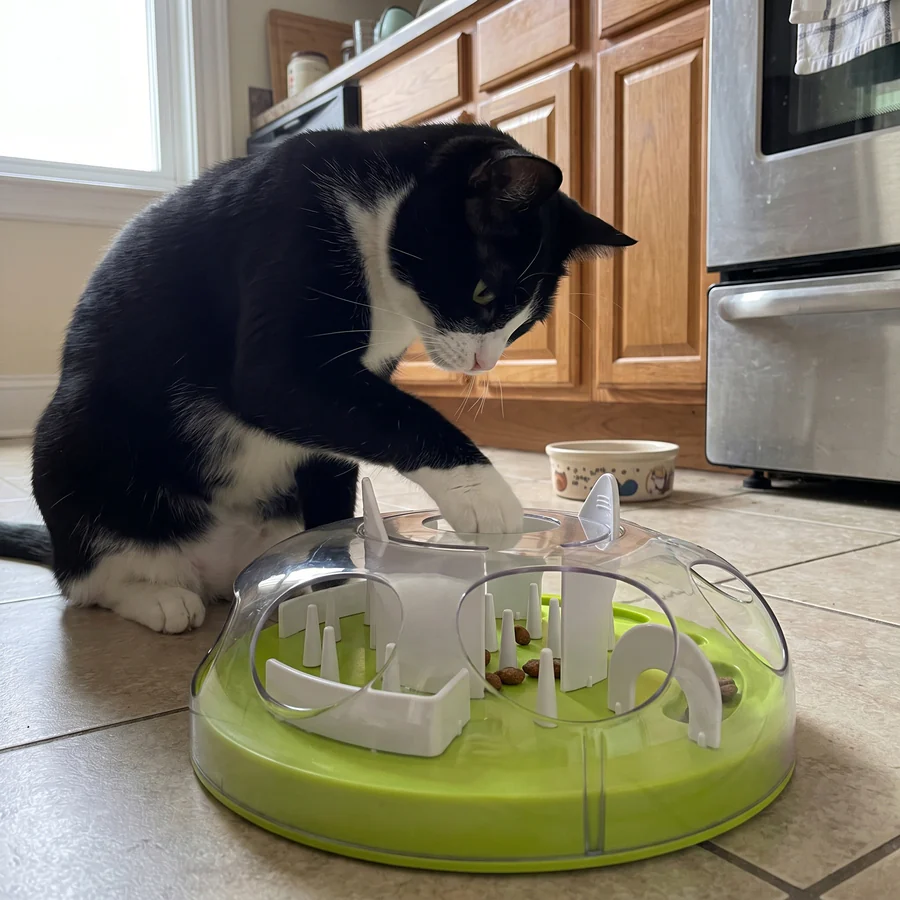
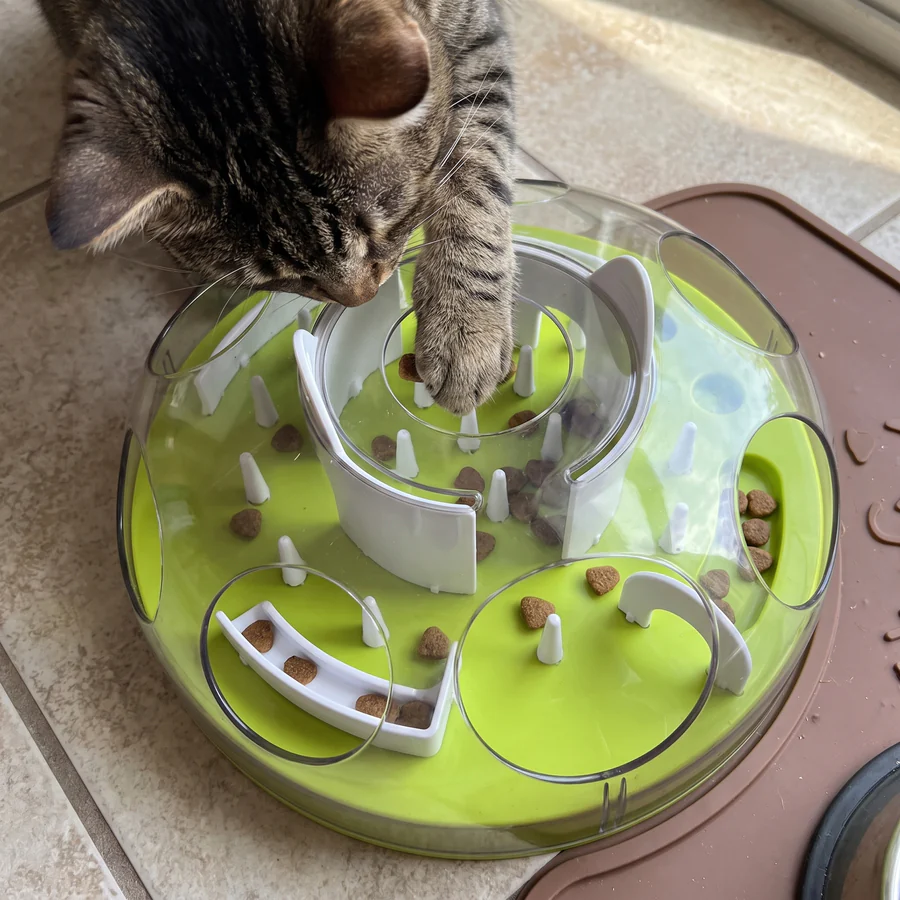
A cat who has been busy sleeps better. Serve part of their daily food in a cat puzzle feeder so that meals take effort. Open up a window view. Rotate a few solo toys. A self-rolling toy such as Ground Prey gives them something to stalk while you are out.
One honest warning about that last one. It naps after five idle minutes and wakes once about two hours later for a surprise round, which is charming at 3 PM and less so at 1 AM on a hard floor. Put it away at bedtime. There are more daytime ideas in our guide to keeping an indoor cat entertained.
What not to do
Do not punish, shout or reach for a spray bottle. Your cat will not connect it with the running, and a frightened cat sleeps worse, not better. Do not shut them in a bathroom as a penalty. If you need the bedroom to yourself, close your own door instead, and make sure they have water, a litter box, a scratcher, a comfortable bed and a toy or two on their side of it. Then ignore the scratching at the door, which is the hard part.
A two-week plan for quieter nights
Here is the whole routine in five lines. The tools for it, a wand set, a self-rolling ball and a puzzle feeder, come together in the Indoor Hunter Kit, which ships free in one box.
- Morning: a short play session, then breakfast, ideally not the minute you wake.
- Day: puzzle feeder, window view, a couple of solo toys.
- Evening: ten to fifteen minutes of wand play, wound down slowly, then the main meal.
- Night: noisy toys put away, no response to wake-up calls.
- Two weeks: hold the line before you judge the result.
Quick answers
Why does my cat go crazy at 3am?
Cats are wired to be active around dawn and dusk, and indoor cats often sleep all day and store up energy. If racing around or meowing at night has ever been rewarded with food or attention, it also becomes a habit. More play in the evening, a late meal and no response at night usually settle it.
Should I lock my cat out of the bedroom at night?
You can, and for light sleepers it is often the only way to get through the first two weeks. Give them everything they need on the other side: water, a litter box, a bed, a scratcher and a few quiet toys. Do not open the door in response to meowing or scratching, or you teach them that it works.
Is it OK to feed my cat right before bed?
Yes, and it is part of the fix. Cats tend to groom and sleep after a meal, so save a portion of the daily ration for after the evening play session. Split the normal daily amount rather than adding extra food.
Do cats grow out of the night zoomies?
Mostly. Kittens and young cats have the most frequent and dramatic zoomies, and they usually calm down with age. Routine matters more than age, though. An under-exercised adult cat will still run laps at midnight.
Are zoomies after using the litter box normal?
Yes, a sprint after the litter box is common and harmless. If it comes with straining, crying, frequent trips to the box or going outside the box, see your vet, because those point to a medical problem rather than high spirits.
General care advice, not veterinary advice. If your cat’s behaviour changes suddenly, or they stop eating, talk to your vet.