Guide · 4 min read
Cat eating too fast and throwing up: what helps, and when it is a vet problem
A cat who bolts a meal and brings it back up a few minutes later, mostly undigested, is usually regurgitating because they ate too much, too fast. Slow the meal down: split the daily food into several small meals, serve dry food in a puzzle feeder or spread out on a flat tray, serve wet food on a lick mat, and feed multiple cats in separate places. One thing first, though. Vomiting that happens more than once a week, or comes with weight loss, low energy, appetite changes, diarrhea or blood, needs a vet, not a gadget.
Regurgitation or vomiting: how to tell
They look similar on the carpet and they mean different things. As PetMD explains it, regurgitation is passive. Food slides back up soon after eating, with little warning and no heaving, and it looks much as it did in the bowl, often in a tube shape. Eating too fast is a classic cause.
Vomiting is active. You will see drooling or lip-licking, then the belly heaving, and what comes up is partly digested and can appear hours after a meal. Note which one you see, how often and how soon after food. A short phone video helps your vet.
See your vet first if any of this is true
Slow feeders solve a speed problem. They do not treat illness, and vomiting has a long list of medical causes, from hairballs and parasites to swallowed objects, inflammatory bowel disease, kidney disease, diabetes and an overactive thyroid. Book an exam if any of the following applies. The once-a-week threshold comes from Cornell’s Feline Health Center. A cat who retches repeatedly and produces nothing, or who may have swallowed string, should be seen the same day.
- Your cat vomits more than once a week.
- There is blood in the vomit.
- They seem tired, weak or uninterested in food.
- They are drinking or urinating noticeably more or less than usual.
- There is diarrhea at the same time.
- They are losing weight, or the problem continues after you have slowed their meals.
Why some cats inhale their food
Cats are built to eat many small meals, each one earned. A bowl filled twice a day is the opposite, and some cats respond by eating as if the food might leave. Competition makes it worse: a cat who eats next to another pet often races. Long gaps between meals mean a hungrier cat and a faster start. Dry food adds a twist of its own, since kibble swallowed whole absorbs fluid and swells in the stomach. A sudden, ravenous appetite in a cat who used to eat calmly is a different matter, and one for your vet.
Feed smaller meals, more often
Start here. Keep the daily amount the same and divide it up. International Cat Care suggests at least five small portions spread over the day and night, and a timed feeder can cover the ones that fall while you are at work or asleep. Measure the food, so that little and often does not quietly turn into more.
Make dry food take longer
The simplest slow feeder is already in your kitchen. PetMD suggests spreading kibble across a large, flat baking pan, so your cat has to pick pieces up one at a time instead of taking mouthfuls.
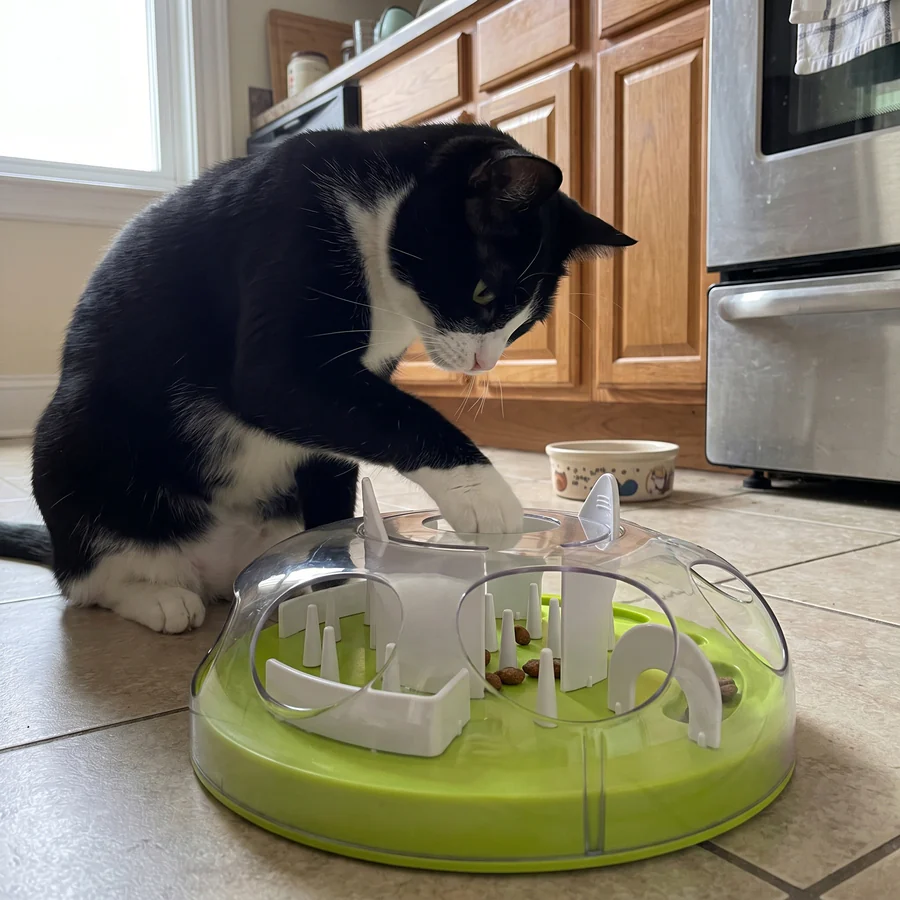
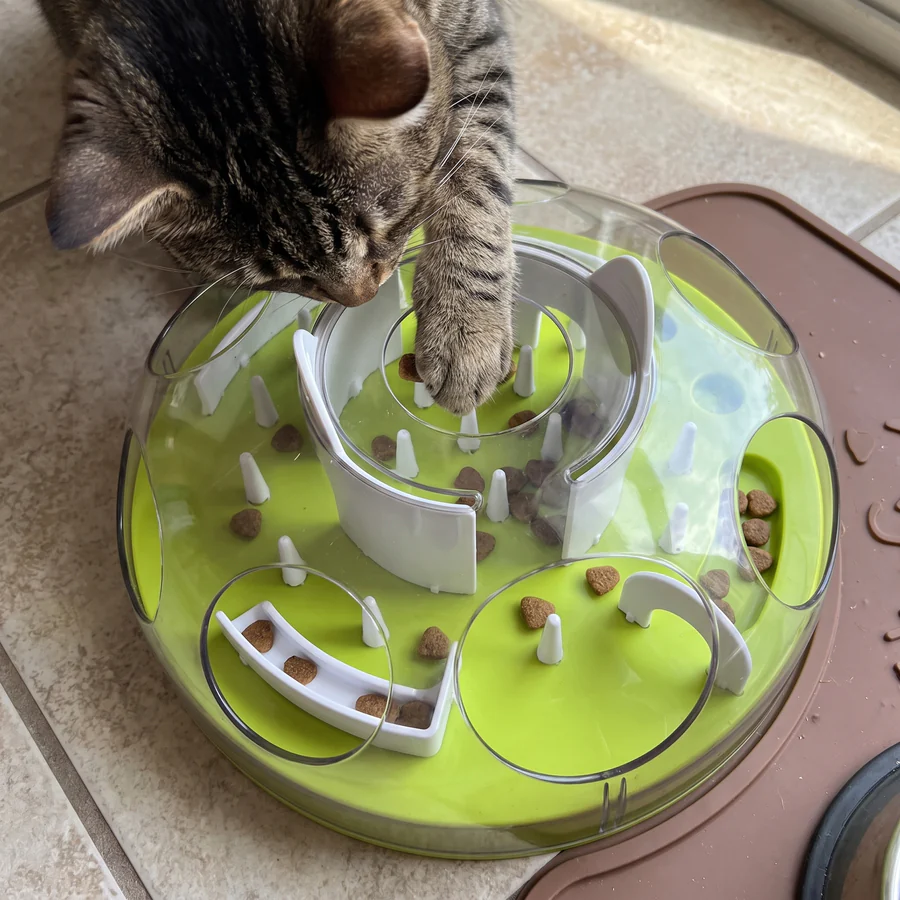
A puzzle feeder goes further, because it adds thinking and paw work. So, are puzzle feeders good for cats? Yes. International Cat Care reports benefits that go beyond slower eating, including more activity, less stress and help with weight control. A cat puzzle feeder like The Forage Puzzle is a round maze, about 12 inches across, with a clear top over a green base. It takes dry kibble and treats, not wet food, and it washes by hand.
Start easy. Put food near the openings so your cat wins right away, and keep a bowl alongside for the first few days. Watch the first meals. PetMD notes that some slow-feeder designs make a cat gulp more air, and an older or fussy cat may simply eat less. If the total eaten drops, make it easier or go back to the pan.
Make wet food take longer
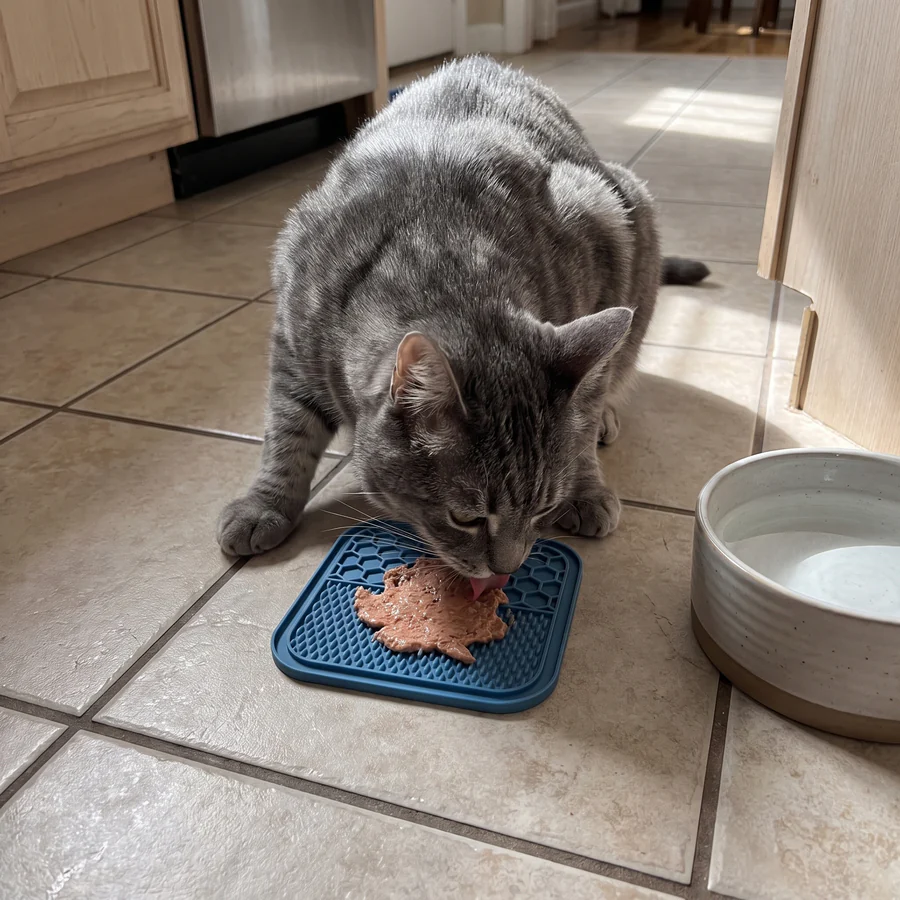
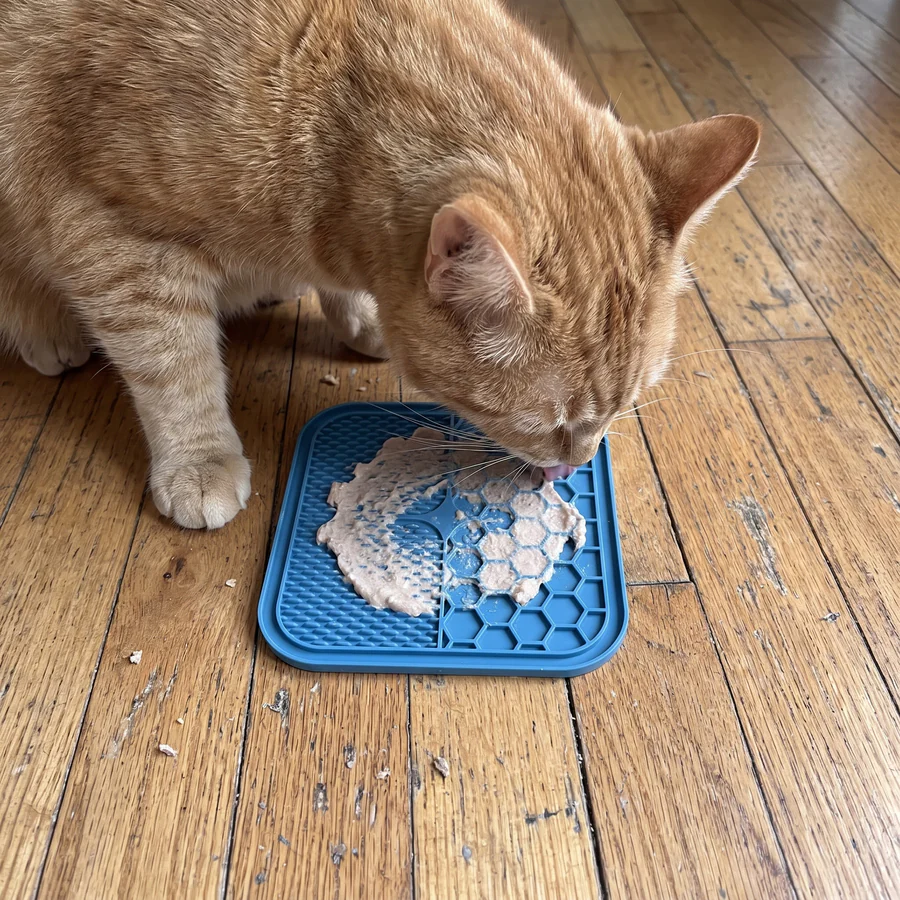
Wet food cannot go in a maze, but it spreads. Press a thin layer into a cat lick mat and a meal that lasted thirty seconds lasts several minutes, because a tongue can only lift a little at a time. Are lick mats good for cats? For most, yes. They slow eating, and many cats seem to find steady licking calming. The Slow Moment is a silicone mat of about 6 by 6 inches with two textures and a suction back. You can freeze it for a longer session. Supervise, take it away if your cat chews the mat rather than licking it, and wash it after every use, since food left in the grooves spoils quickly. PetMD also notes that moistening dry food can reduce regurgitation.
Feed cats apart
If you have more than one pet, separate them at mealtimes. International Cat Care points out that cats do not like sharing bowls or being watched by other cats while they eat. Different rooms are ideal. Opposite sides of a room, out of each other’s sight, is the minimum. Many speed eaters slow down the day they stop having to guard their dinner.
What to expect
If speed was the cause, slower meals should bring a clear improvement within days. If your cat still brings food up after you have slowed things down, book the vet visit and take your notes and video along. For more ways to make food interesting, see our cat puzzle feeders and lick mats and our guide to keeping an indoor cat entertained. Unused, both can be returned within 30 days.
Quick answers
Why does my cat throw up right after eating?
The most common reason is eating too much, too quickly, which brings undigested food back up within minutes. Hairballs and a range of medical problems can do it too. If it happens more than once a week, or your cat seems unwell, see your vet.
Are puzzle feeders good for cats?
Yes. They slow down fast eaters and give indoor cats mental and physical work, and International Cat Care lists benefits including reduced stress and help with weight loss. Introduce one gradually, start on the easiest setup and check that your cat is still eating their full ration.
Are lick mats good for cats?
For most cats, yes. A lick mat makes wet food or a lickable treat last longer, and many cats seem to find the licking itself calming. Supervise its use, remove it if your cat tries to chew it, and wash it after every use.
Is it normal for a cat to throw up every week?
No. It is common, which is not the same thing. Cornell’s Feline Health Center advises a veterinary exam for cats who vomit more than once a week, and sooner if there is weight loss, low energy, appetite change, diarrhea or blood.
Should I raise my cat’s food bowl?
It may help some cats who regurgitate, since a raised bowl lets gravity assist the trip down. It will not slow a fast eater by itself, so combine it with smaller meals or a slow feeder. Persistent regurgitation still needs a vet.
General care advice, not veterinary advice. If your cat’s behaviour changes suddenly, or they stop eating, talk to your vet.